Flour Weighing & Bagging Product Behaviour
Provide representative flour samples and describe product flow during hopper loading, dosing and discharge. Include normal variation and any bridging, settling or dusty handling observed in your process.
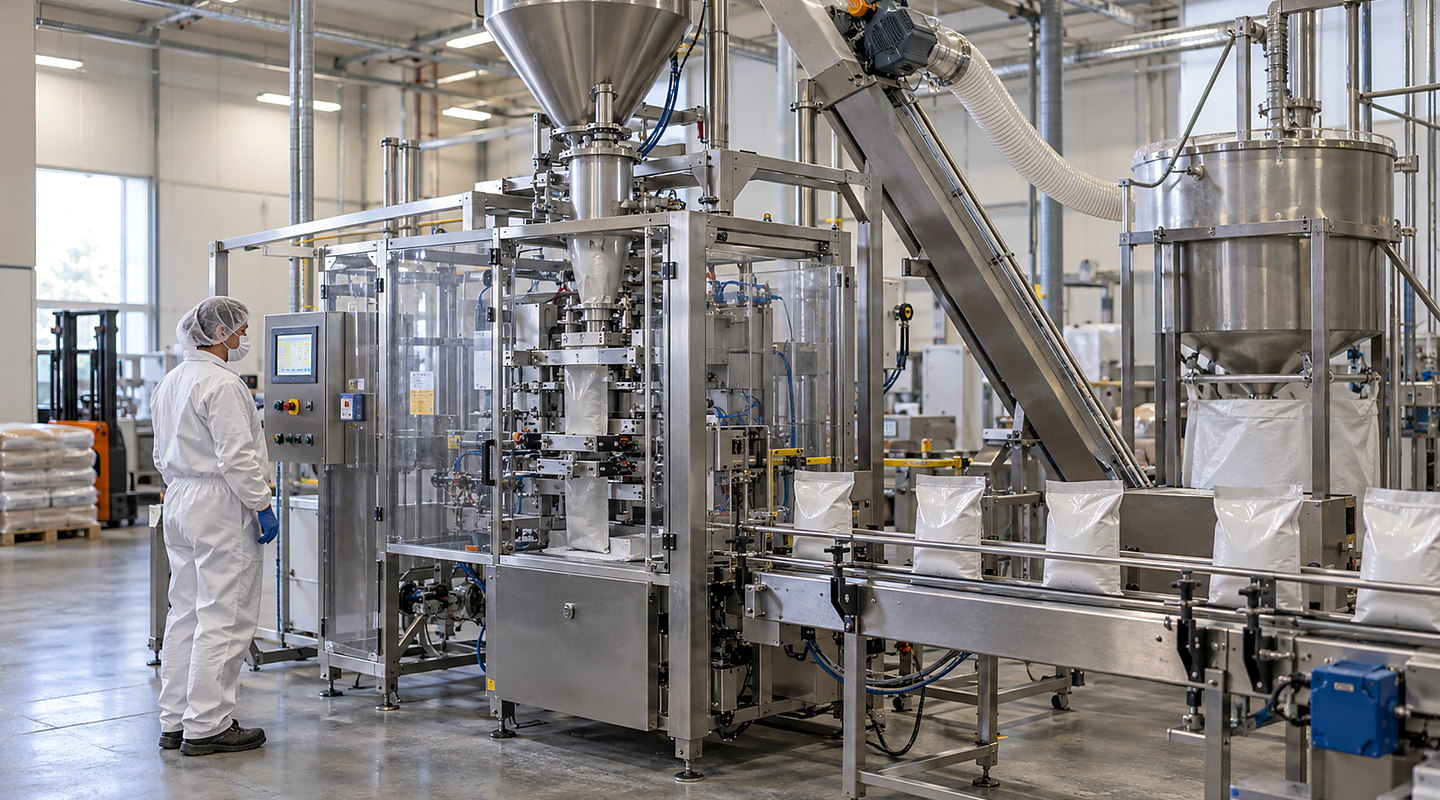
Plan flour bagging machines around your product, pack range, target output, cleaning needs and finished-pack checks. Discuss a practical line concept with Lancing using representative samples.
Speak directly with Lancing about flour weighing and bagging.
Use the intended flour and bag construction to assess dosing, discharge and the condition of the bag mouth before closing. Specify pack weights, the expected run pattern and cleaning requirements. Record dust observations, fill results and finished-seal checks in the trial rather than assessing the filler in isolation.


For routine production using flour weighing and bagging, share the normal condition, realistic range and difficult cases the finished system must handle.
Provide representative flour samples and describe product flow during hopper loading, dosing and discharge. Include normal variation and any bridging, settling or dusty handling observed in your process.
Send empty and filled examples of each proposed bag, with dimensions, construction and closing method. Include bag-mouth presentation and the transfer from filling to closing in the trial.
State target net bag weights, allowed variation and how tare and filled weight will be checked. Agree the sample record and acceptance method before comparing machines.
Describe accepted bags per hour, batch lengths and normal refill, cleaning and short-stop patterns. Include closing and discharge so the target covers the complete route.
Describe product changes, access to product-contact parts and your site cleaning procedure. Agree what the trial should record about emptying, cleaning and the first accepted bags after restart.
Define filled-bag condition, closing or seal checks and the weight-check method. Include rejected-bag handling and the checks required before production resumes.
The right choice changes with flour weighing & bagging product behaviour, container, bag or pack range, your line layout and required results.
You can review decisions about cleaning, access and changeover method and finished-pack checks and reject handling at each stage.
Send representative flour samples and examples of the proposed bags. Explain product variation, pack dimensions and the difficult loading, bag-presentation or closing conditions the trial needs to reproduce.
Compare the proposed dosing or weighing route with the intended flour and bags. Record filled weights, discharge behaviour and the condition of the bag mouth before closing.
Define upstream flour supply, refill arrangements, filled-bag transfer, closing and discharge. Review space, services, controls and operator access against your actual production pattern.
Agree the production, cleaning and changeover checks, then record filled-bag and closing results, rejected-bag handling and the first accepted bags after restart.
Your final solution for flour weighing and bagging must reflect the law, current standards and site-specific risks that apply to your installation.