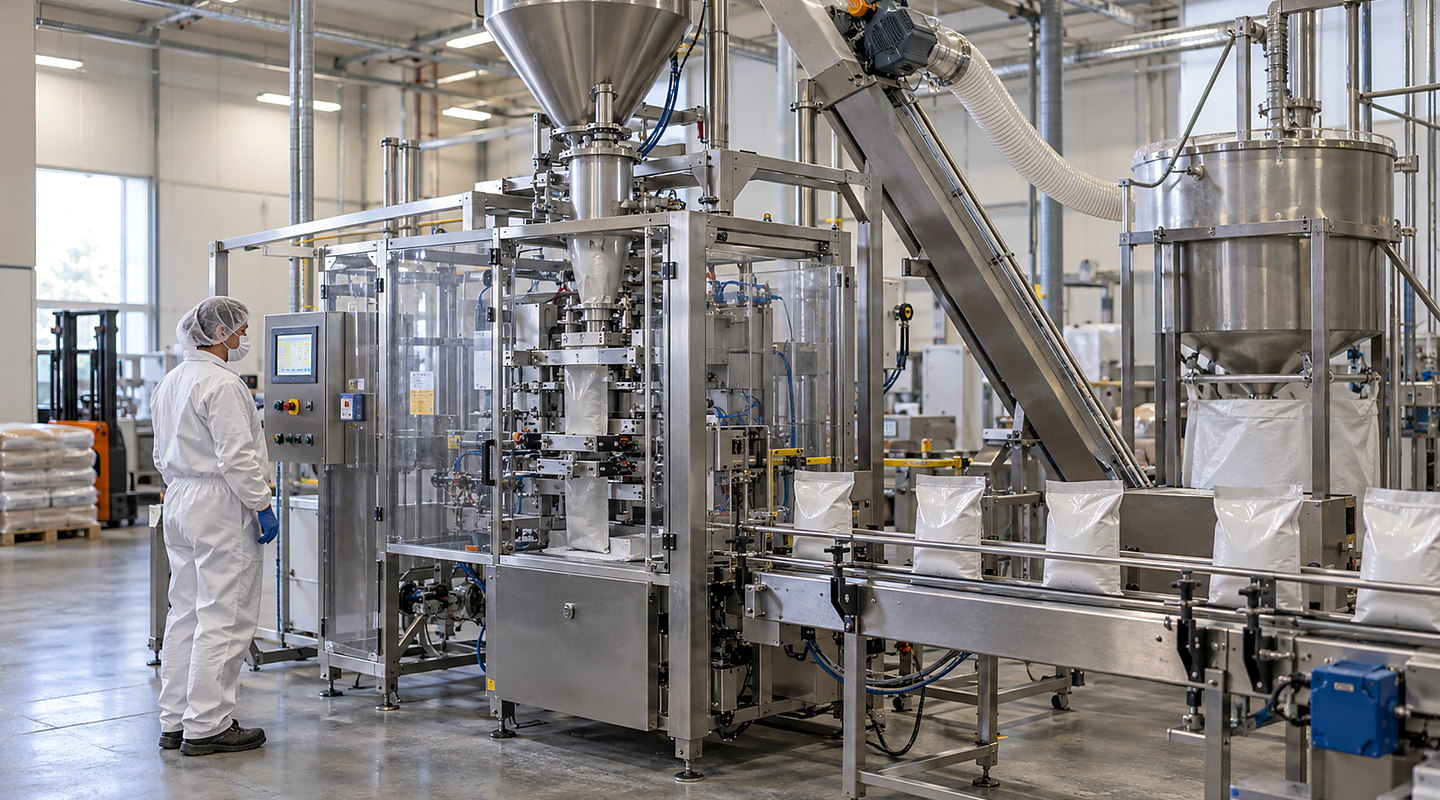
Short Runs and Format Changes Involving Flour Weighing and Bagging
Plan short runs and format changes involving flour weighing and bagging around representative products, packs and packaging materials, line connections, operating limits, acceptance checks and next steps.
In brief
For short runs and format changes involving flour weighing and bagging, start with representative products, packs and packaging materials and your full operating sequence, then check the credible product, pack, cleaning and line-rate extremes before committing to a final layout.
Plan flour bagging machines around your product, pack range, target output, cleaning needs and finished-pack checks. Discuss a practical line concept with Lancing using representative samples.
On the production floor
Plan for the conditions your team handles every day — Flour Bagging Machines
Plan flour bagging machines around your product, pack range, target output, cleaning needs and finished-pack checks. Discuss a practical line concept with Lancing using representative samples. For short runs and format changes involving flour weighing and bagging, the deciding details include flour weighing & bagging product behaviour, target dose, count or pack weight and finished-pack checks and reject handling.
Details worth resolving early for short runs and format changes involving flour weighing and bagging
Question 1
Flour Weighing & Bagging Product Behaviour
Provide flour samples for the products that will share the equipment, including credible difficult handling or fill conditions. Record what changes between products so each planned change can be included in the trial.
Question 2
Container, Bag or Pack Range
List the bag formats and packaging materials used for each short run, with representative samples and supplier tolerances. Explain which changes require a different handling or closing setup.
Question 3
Target Dose, Count or Pack Weight
Give the target pack weight and acceptable limits for every format, and identify settings that must change between runs. Agree the finished-pack checks needed before the next run is accepted.
Question 4
Required Output and Production Pattern
Describe run lengths, required output and the frequency of format changes, replenishment and stops. Compare complete run-and-change cycles rather than a nominal automatic rate.
Question 5
Cleaning, Access and Changeover Method
Describe the change from one product or bag format to the next, including cleaning, access and maintenance. Agree how food-contact, hygiene and allergen controls will be validated for the actual product and site.
Question 6
Finished-Pack Checks and Reject Handling
Plan the checks and reject handling for the first packs after a change as well as normal production. Record how faults are detected, communicated and recovered from before the next run continues.
Your operating cycle
Plan for more than automatic running
Include replenishment, normal production, planned change, short stops, fault recovery, cleaning and maintenance for short runs and format changes involving flour weighing and bagging. A fast automatic step can still leave your team with a slow or awkward overall process.
Normal production and variant changes
Replenishment and material presentation
Operator access and safe interventions
Cleaning, maintenance and recovery
Prove the result
Test short runs and format changes involving flour weighing and bagging against representative products, packs and difficult production conditions
Normal production
Run the agreed product or part mix for short runs and format changes involving flour weighing and bagging at your intended operating pattern.
Difficult conditions
Include credible extremes for flour weighing & bagging product behaviour and container, bag or pack range.
Fault and recovery
Show how the proposed solution detects a problem affecting short runs and format changes involving flour weighing and bagging, responds safely, informs your team and restarts under control.
Important limits
Be clear about what the trial has shown
Food-contact, hygiene and allergen controls must be validated for the actual product and site.
The selected method must be trialled with representative product and packaging.
Supplier tolerances and product-condition changes can alter handling or fill behaviour.